

SaaS & digital platforms
A SaaS SEO agency and website design that gets the trial started.
Tech Conversion works as a SaaS SEO agency and website design team for software companies in India, the UAE and the USA, researching how buyers search before anything is built, so a self-serve user can reach signup by one path and a buying committee can find the pricing, security and integration answers it needs on another.
The marketing site has one job: get a qualified visitor into the product. Everything that does not serve that is decoration you are paying to maintain.
- Who signs
- Often the end user first, with a manager or finance approving later.
- How long it takes
- Self-serve in minutes, or committee-led over months. Many products have both and serve neither well.
- What starts it
- A tool that stopped scaling, a team that outgrew a spreadsheet, or a competitor's mention.

Already built in this sector
SaaS & digital platforms, for these businesses
What this sector is under
Why a SaaS website is harder than it looks
The pressures that shape how a buyer here reads a website, before anything about the website itself.
Two buyers arrive at the same homepage
The self-serve user wants to be inside the product within minutes and will close the tab rather than request a demo. The committee wants pricing, security posture and an integration list before it books anything. A homepage tuned for one of them leaves the other with nowhere sensible to go.
The category is already understood
Nobody lands on a software product page needing the category explained to them. They are choosing between products inside it, and a homepage that opens by defining what the category does has spent its only screen telling the visitor something they knew before they clicked.
The site keeps working after the sale
Subscription revenue means existing customers read the site too: the changelog, the docs, the status page and any change to the plans. A pricing change published without explanation costs renewals, which is a problem a one-off sale never has.
The comparison happens somewhere else
Buyers shortlist on review directories, in community threads and increasingly by asking an assistant to name the options. The pages have to be written so they can be quoted accurately by someone who never reads them in order.
What goes wrong on the sites
- Positioning that describes the category. Homepages explaining what a CRM is instead of why yours. The visitor already knows the category or they would not be here.
- Pricing hidden behind a form. For self-serve buyers, a hidden price is a closed tab. It only makes sense when deals are genuinely bespoke.
- Feature lists instead of jobs. Users buy an outcome. Feature grids force them to translate, and many will not bother.
- One path for two very different buyers. The self-serve user and the enterprise committee need different journeys from the same homepage.
Who we work with
Inside SaaS and digital platforms
The roles and company types inside the sector, and the situations that bring them to a firm like this one.
Who we work with
- Founders and product leads at early and growing software products
- Heads of growth and demand generation who own the marketing site but not the application
- Product marketing managers rewriting positioning after a pricing or packaging change
- Companies selling self-serve, sales-assisted or both, to businesses in India and abroad
What brings them to us
- A pricing or packaging change the current site cannot express
- A move upmarket where procurement now reads every page
- A funnel filling with signups that nobody converts
- A competitor comparison page outranking the product's own name
- A second product with nowhere to live on the current site
What this sector usually needs
The services that apply here
Linked rather than re-explained. Each one has its own page with what it includes, what it costs and how it runs.
Custom websitesA site written from scratch for your business, not bent out of a theme.Landing pagesSingle-purpose pages built for a campaign, tested against a real alternative, and shipped fast enough to matter while the budget is still running.SEOTechnical, on-page and content SEO run as one programme.Google AdsA paid search agency judged on cost per lead, not clicks.
What we do about it
SaaS design that starts with the buyer
The plays that are specific to SaaS & digital platforms, rather than the ones every site gets.
- 01
Research the demand first
We look at what your buyers search for, which products they compare you with and where trials come from today. The site map and the content plan come out of that, not out of a template.
- 02
Position against the alternative
Not the category, and not a competitor by name. The thing they will do if they do not buy, usually a spreadsheet.
- 03
Show the product early
Real interface, real data shapes. A screenshot above the fold outperforms a paragraph describing it.
- 04
Pricing that answers the question
Clear tiers, honest limits, and a plain explanation of what changes at each step.
- 05
Two doors, one house
A self-serve path and a talk-to-sales path, both obvious, neither undermining the other.
- 06
Jobs, integrations and comparisons
Pages built on what people are trying to get done, the tools they already use and the alternatives they are weighing. These are the searches nearest a decision, and usually the last pages a SaaS site builds.
- 01Research the demand first. We look at what your buyers search for, which products they compare you with and where trials come from today. The site map and the content plan come out of that, not out of a template.
- 02Position against the alternative. Not the category, and not a competitor by name. The thing they will do if they do not buy, usually a spreadsheet.
- 03Show the product early. Real interface, real data shapes. A screenshot above the fold outperforms a paragraph describing it.
- 04Pricing that answers the question. Clear tiers, honest limits, and a plain explanation of what changes at each step.
- 05Two doors, one house. A self-serve path and a talk-to-sales path, both obvious, neither undermining the other.
- 06Jobs, integrations and comparisons. Pages built on what people are trying to get done, the tools they already use and the alternatives they are weighing. These are the searches nearest a decision, and usually the last pages a SaaS site builds.
How the work differs here
Same services, different work
What changes about the build and the marketing when the client is in this sector, compared with the version every site gets.
Two doors, built and measured apart
The self-serve path and the sales-assisted path get their own pages, their own calls to action and their own tracking, so neither is judged by the other's numbers and neither quietly blocks the other on the way through.
The product appears before the argument
Real interface, real data shapes, placed high on the page. Screenshots and short recordings are treated as page content with captions and alternative text, because they carry the explanation rather than decorate it.
Pricing is treated as a product surface
Tiers, limits, what changes when a customer moves between them, how renewal works and how to cancel, written properly once so support stops answering the same question and the sales team stops apologising for the page.
Content built on jobs, integrations and comparisons
The pages nearest a decision are the ones describing the job the product does, the tools it connects to and how it stands against the alternative. They are also the last pages most software companies get round to building.
From this sector
The work we can show you
Live sites, not mockups. Where a written case exists it is linked; where we hold a before and after, that is linked instead.
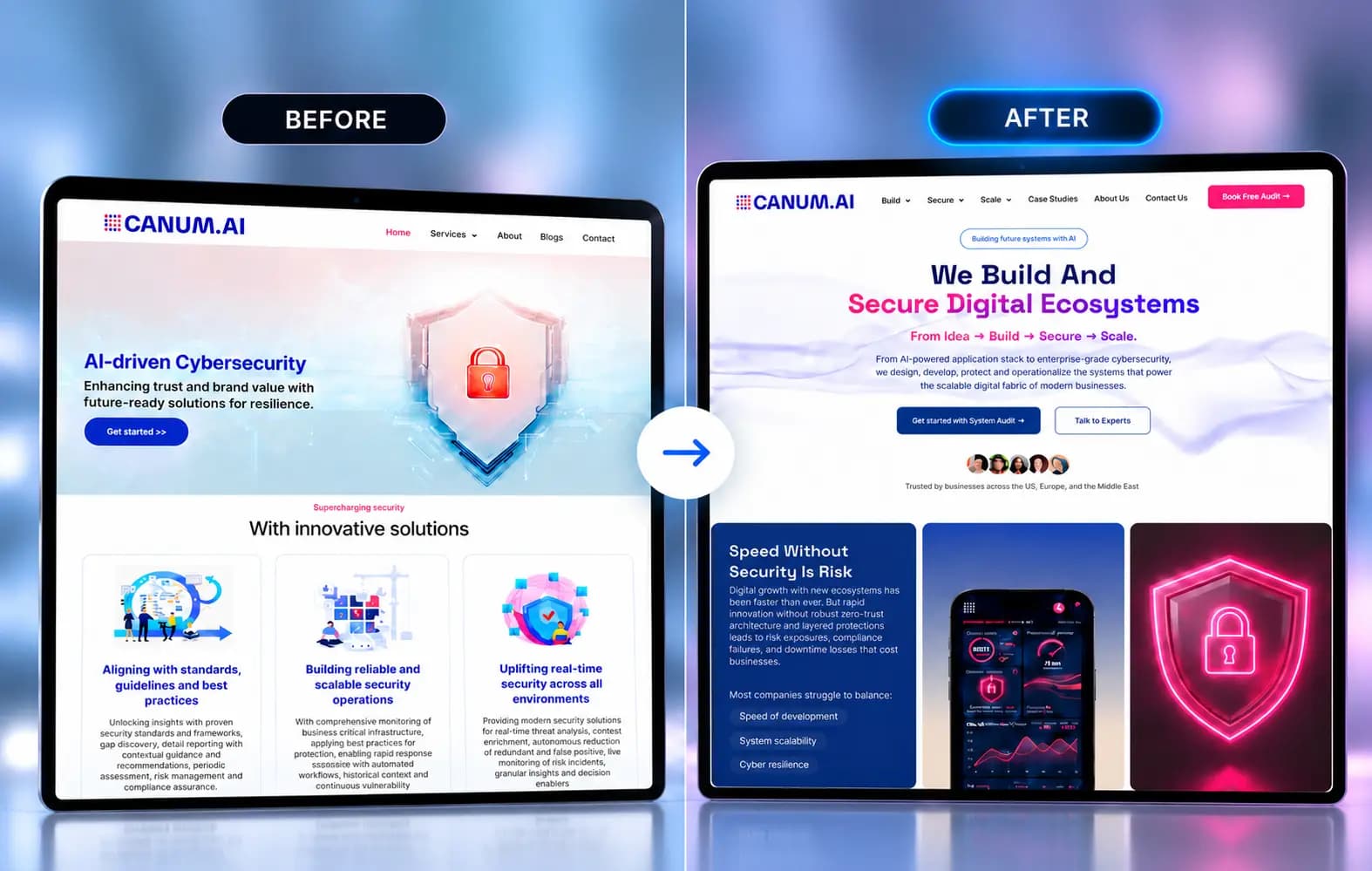
Before and after · Artificial intelligenceCanum AIA technical product given a clear first screen, so the value lands before anyone is asked to book a demo.Compare them
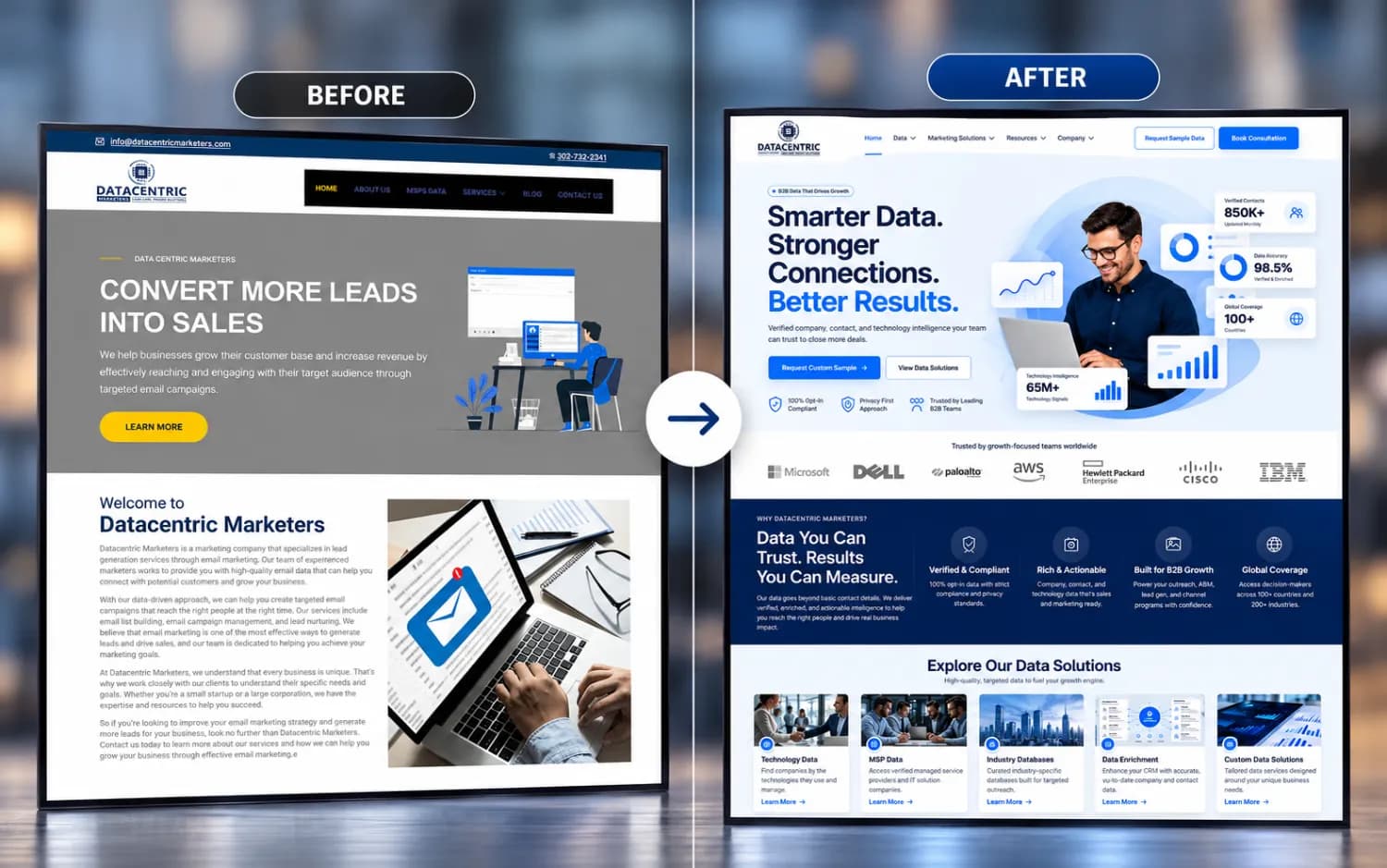
Before and after · Email marketing & dataDatacentric MarketersTwelve services in a grid of identical yellow buttons, none of them saying who they were for. Rebuilt so the range reads as a range rather than a wall.Compare them
Risks and exposures
What can go wrong here
Where a website or a campaign in this sector creates a liability rather than an enquiry.
Selling the roadmap
Screenshots of an unreleased interface, a feature page ahead of the build, a trial that does not contain what the page showed. It produces refund requests, and under the consumer protection framework it is a misleading advertisement rather than an optimistic launch.
Security wording the documentation cannot support
A security questionnaire arrives with the first serious deal, and phrases used loosely on the marketing site get compared against what the platform actually does. Every claim has to trace to something the company can send.
Billing described differently from how it bills
Renewal terms, the trial-to-paid moment and the cancellation route on the pricing page have to match the gateway and the mandate behind them. Where they differ the result is chargebacks, complaints and a support queue that cannot fix the cause.
A marketing site drifting from the product
Screenshots and feature copy age with every release and nobody owns updating them. The first thing a trialling user notices is that the page was describing an older version of the thing they just opened.
What we measure
Measured, not asserted
We do not publish industry benchmarks we cannot source. What we can say is exactly what gets measured for a client in this sector, and how.
Trial and demo starts, by path
Recorded with the campaign and the landing page attached at the moment of signup, and reported for the self-serve door and the sales-assisted door separately rather than added into one total that describes neither.
Qualified pipeline confirmed by sales
Every enquiry checked against the definition of fit the sales team actually uses, in a monthly review, so a form fill is never reported as pipeline before somebody has spoken to the person who sent it.
Visibility for job, integration and comparison terms
Positions and impressions tracked by page group rather than as a site total, with the brand's own name held apart, because ranking for the product name proves only that the product has a name.
Answer engine presence for shortlist questions
Whether the product is named when an assistant is asked to recommend tools for the jobs it does, recorded query by query on a set schedule, and read alongside the review directory profiles that feed those answers.
Questions
SaaS SEO agency questions, answered
What SaaS & digital platforms buyers ask before they commission work.
Should a SaaS website show pricing?
Yes, whenever the product can be bought without negotiation. Hiding it filters out qualified self-serve buyers to catch a few enterprise leads, which is usually a bad trade. Publish the tiers, the limits on each, how billing renews and how to cancel. Recurring card billing in India runs under the RBI e-mandate framework, so describe renewal and pre-debit notice the way your payment gateway actually handles them.
What should be above the fold on a SaaS homepage?
What the product does, who it is for and a way in. Do not explain the category: your visitor knows what a CRM is or they would not be here. Position against the spreadsheet they will keep using instead, and show a real screenshot of the interface rather than a stock illustration.
Should the SaaS marketing site and the product live on the same domain?
The usual split is the marketing site on the root domain and the application on a subdomain, so search value accumulates against the root while the application's release cycle stays clear of content changes. What matters more than the split is that docs, changelog, status and pricing are all reachable and consistent, because a trialling customer and a prospect use the same pages for different reasons.
How much should a SaaS website say about security?
Enough that most of a buyer's security questionnaire can be answered without a call, and nothing the documentation cannot support. A security page that states where data is hosted, how access is controlled, which subprocessors are used, and whether a certification is held, in progress, or only aligned to, removes weeks from an enterprise review. Vague reassurance in place of those facts adds weeks instead.
What does a SaaS SEO agency do differently?
It works on the problem your product solves rather than on the product name. SaaS SEO has to reach people who do not yet know software exists for this, which means the content targets the symptom and the product appears as the answer.
Do we need a SaaS marketing agency, or is SEO enough?
It depends on whether people already search for the problem you solve. If they do, SEO and a strong site capture that demand over time. If the category is new and nobody searches for it yet, paid social and content have to create the demand first, and a SaaS marketing agency that only sells one channel will tell you otherwise. We look at the search data with you before recommending either.
What makes a SaaS landing page work?
Answering what it does, who it is for and what it costs before asking for anything. A SaaS website loses people to the competitor tab already open beside it, so anything that delays those three answers costs a trial.
How much does SaaS UI matter to conversion?
More after signup than before it. SaaS UI design decides whether somebody reaches the moment the product becomes useful, and most churn in the first week is a design problem rather than a product one.
What should SaaS website design include beyond the marketing pages?
The product screens people meet first: onboarding, empty states and the first task. SaaS design that stops at the marketing site hands the hardest screens to whoever is free that sprint. It also keeps the brand honest, because SaaS brands that look bolder outside the product than inside it feel like a bait and switch.
Can you guarantee trials or rankings?
No. Signups depend on your product, your pricing, your competitors and changes at Google that nobody controls. What we can promise is the method: research before building, the self-serve and sales paths measured separately, and changes made from what the data shows rather than from opinion.
Insights
The thinking behind the work, in the open.
We write up the problems we had to solve for a client: how answer engines change what a page has to say, and why a redesign that ignores search can cost a year of ranking. Working notes, not filler.
7 published
All writing